I hired a (personal) AI employee. It works for me in the background, and it’s now a permanent part of my “staff”.
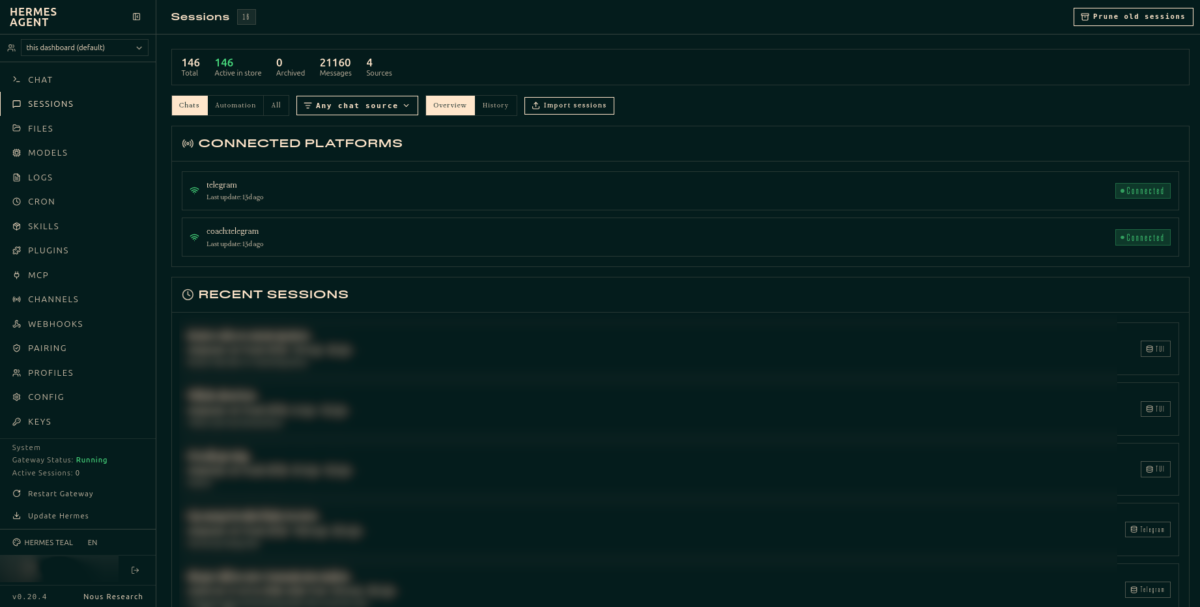
For over a month I’ve run Hermes Agent — an autonomous AI that lives on my hardware, has its own memory, and does things. Not a chatbot. A worker.
What it actually does for me:
🎬 1,500+ videos & articles → downloaded, transcribed, summarized, and filed into a searchable learning library. I just drop a link; it does the rest. And it structures the whole process — turning a chaotic stream of random finds into a clear curriculum and learning plan I can actually work through. A very different outcome from what the social media algorithm will feed you.
🔎 A research assistant that knows my standards. I throw topics at it and it scours various sources — with references, context, and analysis. It’s learned what matters to me in research, so the output comes back the way I’d want it, not generic.
📚 5 Anki (language learning) collections (66,901 media files) synced to my phone via a self-hosted server it deployed — and debugged when the SQLite schema broke.
🔐 My VPN — added a TCP fallback, managed the firewall, and diagnosed a carrier-NAT issue that was blocking me on mobile.
🧠 A private digital coach — its own persona, memory, and Telegram chat, checking in on my career and health. Runs on local models on my own hardware. My conversations never leave my infrastructure.
📝 A notes repository it maintains and cross-references automatically.
What I learned about managing it:
- Autonomy is the unlock. I brief it, it executes end-to-end, and reports back. I don’t babysit it.
- It fails — and self-corrects. Crashed containers, locked databases, retries. Resilience beats perfection.
- Memory compounds. It remembers my personal targets and goals, my health habits, my taste in music. Every interaction gets smarter.
- Privacy is a feature. My most personal conversations — with my coach — run on local models. No cloud, no training on my data.
- You still need judgment. It’s a tool, not a replacement for thinking. I review the important stuff.
The honest take: I’m a realist — I know what technology can and can’t do, and I don’t chase hype. But AI is maturing, and the potential is very significant. After weeks of real use, Hermes Agent has earned its place as permanent infrastructure, not a novelty. It’s the difference between having an assistant and having a staff.
Curious about hiring your own agent — and your own private coach — on your own hardware? Happy to share what I’ve learned.