Anthropic at $2 Trillion: Right About AI, Wrong About the Price?
The technology is real. The question is who captures the value — and Buffett answered this one about cars and planes a century ago.
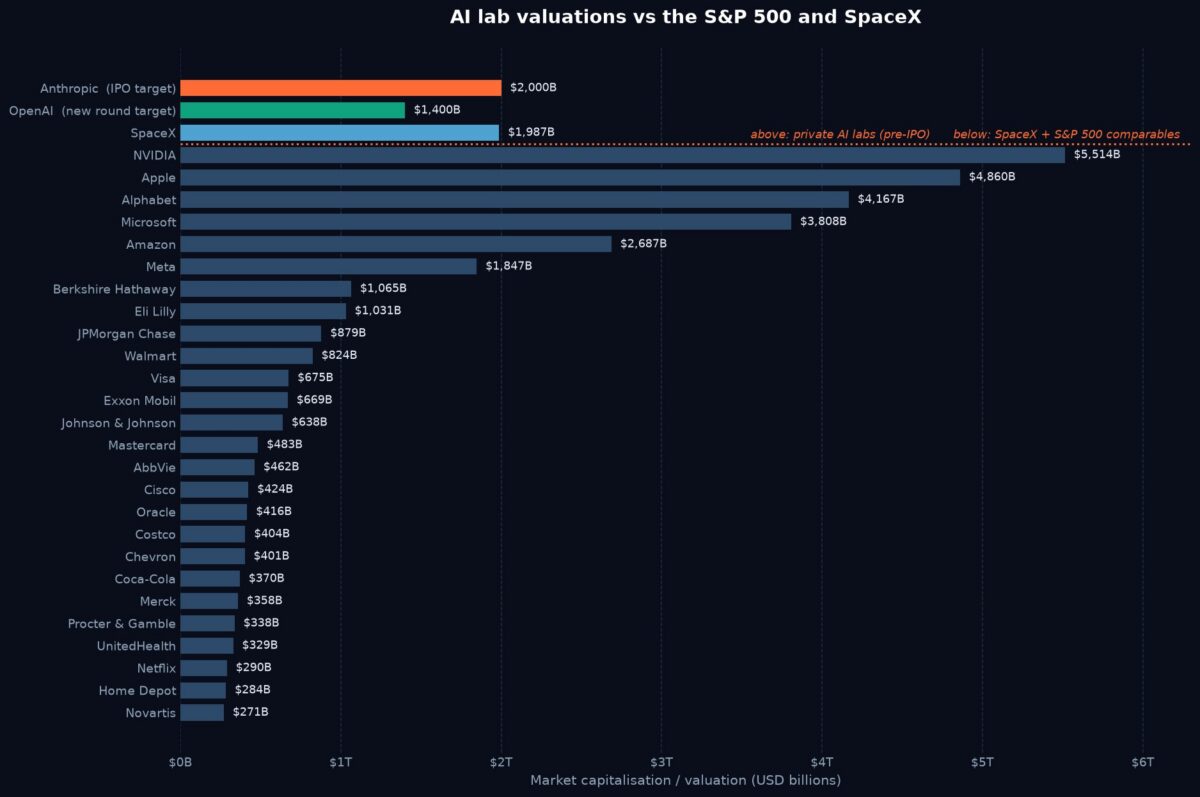
Anthropic is heading for a public listing at a reported $2 trillion.
I want to start with what I actually believe, because it matters.
This technology is real, and it will unlock an enormous amount of economic value. Anthropic went from $386m of revenue in 2024 to $4.59bn in 2025 — twelve-fold growth. Q2 2026 revenue hit $11.5bn, with two consecutive profitable quarters and 300,000+ business customers.
Anyone calling AI “all hype” isn’t paying attention.
So the interesting question isn’t whether AI creates value. It’s who captures it — and whether the price leaves anything for you.
The most under-discussed fact in this debate is Anthropic itself
Anthropic was founded in 2021. Within roughly four years it went from nothing to overtaking OpenAI — the company that invented this market, with the multi-year head start, the Microsoft partnership, and the ChatGPT brand.
On enterprise LLM API spend, Anthropic now leads with about 40% share. OpenAI has slipped to the high-20s.
Impressive. But read it again as an investor:
If a newcomer can reach parity with the leader in five years, the leader did not have a moat.
That is what a moat is supposed to mean — protection against exactly this. We have instead watched model leadership change hands repeatedly between OpenAI, Anthropic, Google, DeepSeek and xAI, with benchmark leads lasting months, not years.
The cost structure says the same thing. Anthropic spent $7.33bn on compute in 2025 — 1.6× its entire revenue — and has committed roughly $518bn to infrastructure over the next decade, about 80% reportedly non-cancelable.
That is usually described as a moat. I’d call it the opposite: the price of staying in the game, which every serious competitor is also paying. Capital intensity that everyone must match doesn’t protect returns — it raises the stakes and converts flexible costs into fixed ones owed even if pricing collapses.